

In modern industrial systems, rotating equipment serves as the heartbeat of continuous operations and production efficiency. However, many professionals still overlook the nuances of how these machines operate and how they are categorized.
Understanding the fundamentals of rotating equipment is not just academic; it is the key to optimizing performance, extending lifecycle, and mitigating risks during maintenance. This article provides a comprehensive deep dive into the definitions, working principles, and common types of rotating equipment used in modern industry.
Nội dung chính
1. Defining rotating equipment
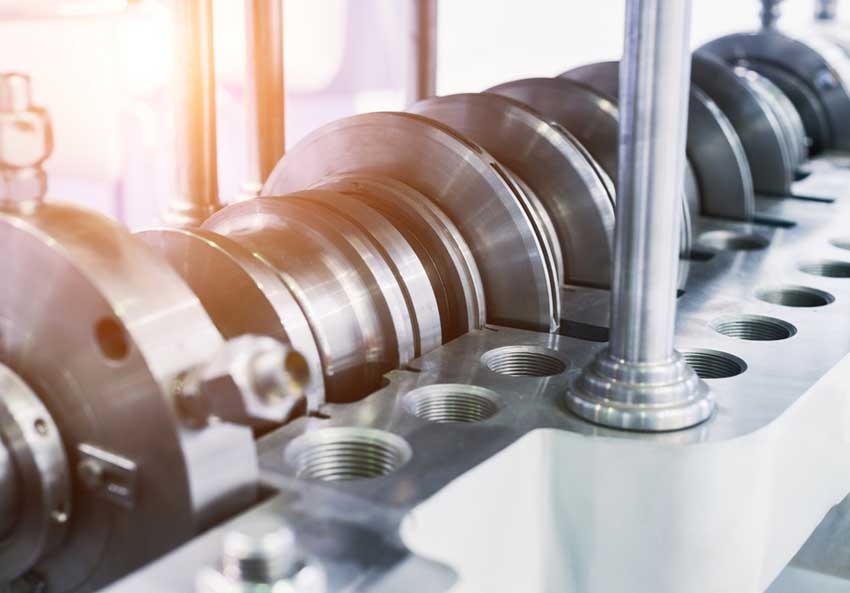
Rotating equipment refers to a category of mechanical devices characterized by components that rotate around a fixed axis during operation. This rotational motion is harnessed to generate, transmit, or transform energy essential or various industrial processes.
The defining hallmark of rotating equipment lies in its ability to convert energy from one form to another through mechanical rotation. Consequently, these machines are often regarded as the “mechanical energy core” within modern production and industrial operating systems.
Core characteristics
- Structural components: Specifically engineered with a rotating shaft, a rotor, and high-precision bearings.
- Resilience in extreme environments: Built for continuous operation under harsh industrial conditions, including high temperatures, extreme pressures, and corrosive environments.
- Energy conversion: Capable of converting diverse energy sources, such as electrical, thermal, or hydraulic power, into functional mechanical motion.
2. Working principles of rotating equipment
The energy conversion mechanism
The fundamental principle of rotating equipment is the continuous conversion of energy between different states.
For instance, a pump converts mechanical energy (from a motor) into hydraulic energy (fluid flow), while a turbine does the reverse, converting fluid energy into mechanical rotation.
The overall efficiency of the system depends heavily on minimizing energy loss during these transitions.
Key factors influencing performance
- Rotational speed (RPM): This metric directly dictates the power output and operational efficiency of the system. Operating below the design speed leads to underperformance, while exceeding it can cause catastrophic mechanical failure.
- Centrifugal force: This force is generated as the rotor spins at high velocities, harnessed in centrifugal machinery to displace liquid and create pressure.
- Friction and thermal load: Friction between moving parts is the primary source of heat in rotating equipment. Without precision lubrication, friction leads to wear, material deformation, and reduced equipment lifespan.
3. Industrial classification of rotating equipment
Pumps
Pumps are essential rotating equipment designed to transport fluids by converting mechanical energy from a rotating shaft into hydrodynamic energy.
- Dynamic pumps:
These operate by increasing the fluid velocity to transfer energy.
Using a rotating impeller, the fluid is continuously accelerated, increasing its kinetic energy. As it exits the pump housing into the piping system, velocity decreases, and kinetic energy is converted into pressure (potential energy).
Key examples include centrifugal pumps and axial pumps, widely used in oil & gas, power generation, and water treatment.
- Rotary pumps
These utilize rotating elements like gears, screws, or vanes to trap and move a fixed volume of fluid from the suction to the discharge side.
The constant rotation of the rotor creates a stable, continuous flow. Because they displace a specific volume per revolution, the flow rate is proportional to speed and largely independent of system pressure.
Common types include gear pumps and screw pumps, ideal for medium to high-viscosity fluids like oils and chemicals.
- Reciprocating pumps
They are high-pressure rotating equipment that move fluids through the back-and-forth motion of a piston, plunger, or diaphragm.
These machines function by changing the chamber’s volume to create a vacuum that sucks liquid in before forcing it out cyclically. Unlike dynamic pumps, their flow rate remains constant and independent of system pressure, relying solely on operational speed.
Common models include piston pumps and plunger pumps, which are the gold standard for heavy-duty industrial applications requiring extreme pressure and precision.
Compressors
Compressors are essential rotating equipment that increase gas pressure by mechanically reducing its volume, effectively boosting the gas’s energy density for HVAC, oil & gas, and chemical systems.
- Centrifugal compressors
These units operate on the principle of dynamic compression using centrifugal force.
As the impeller rotates at high speeds, gas is drawn into the center and flung outward radially, rapidly increasing its velocity. This high-speed gas then passes through a diffuser, where its velocity is decelerated and converted into static pressure.
Centrifugal compressors are prized for their high flow capacity and stable, continuous operation, making them the standard choice for refineries and large energy systems.
- Axial compressors
In this type of rotating equipment, gas flows parallel to the rotor shaft.
The compression occurs through multiple stages of rotating blades (rotors) and stationary blades (stators). Each stage progressively compresses the gas in a continuous, high-speed flow.
Because of their ability to handle massive volumes of air with high efficiency, axial compressors are predominantly used in gas turbines, jet engines, and large-scale industrial aerodynamic applications.
Turbines
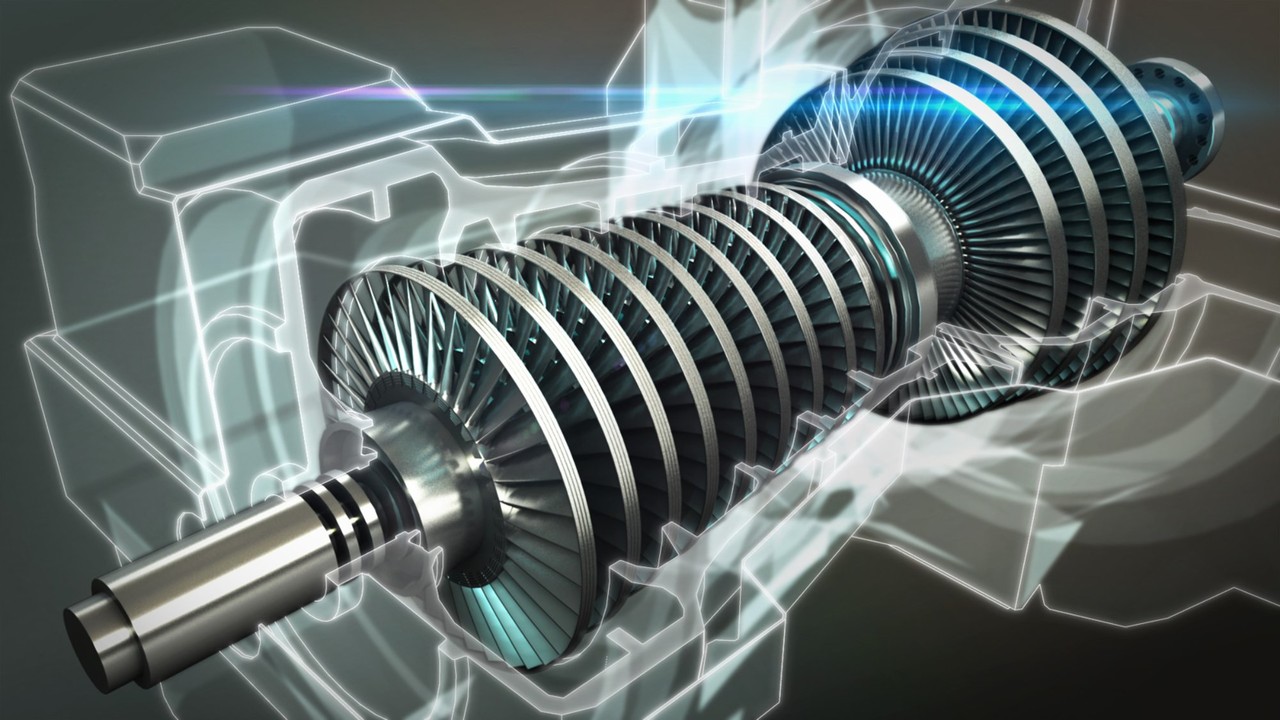
Turbines are a sophisticated class of rotating equipment engineered to extract energy from a moving fluid or gas stream and transform it into useful mechanical work. This rotational energy is the primary driver for electrical generators and large-scale industrial machinery.
- Gas turbines
These units operate on the principle of internal combustion, utilizing high-pressure, high-temperature gas streams to spin the turbine blades.
By burning fuel to create high-velocity gas flows, they deliver exceptional efficiency and quick startup times, serving as the core technology for jet engines in aviation and peaking power plants.
- Steam turbines
They function by allowing high-pressure steam to expand through multiple stages of blades, converting thermal energy into mechanical rotation.
Their ability to provide massive power output and maintain operational stability over long periods makes them ideal for heavy industry and thermal power generation.
- Wind turbines
As a cornerstone of the renewable energy transition, wind turbines convert the kinetic energy of wind into electricity. When wind strikes the aerodynamic blades, it triggers the rotor’s motion, which is then transmitted through a gearbox to a generator.
These systems are increasingly deployed in both onshore and offshore wind farms to support sustainability goals.
Diesel engines
Diesel engines are a critical category of rotating equipment classified as internal combustion engines.
Diesel engines rely on compression ignition, where air is compressed within a cylinder to such extreme pressures that its temperature rises sufficiently to ignite fuel upon injection. This combustion generates immense force that drives the pistons, converting linear motion into the rotational movement of the crankshaft.
Renowned for the superior thermal efficiency and low fuel consumption, this rotating equipment is the primary power source for industrial generators, heavy machinery, and global transport networks.
Thermal engines
Thermal engines are a specialized type of rotating equipment designed to convert thermal energy into mechanical work.
This process typically occurs within a cylinder where the expansion of high-temperature gas or steam exerts force on a piston or turbine blades. This expansion is what ultimately generates the shaft rotation.
In industrial settings, thermal engines provide the necessary mechanical energy to drive pumps, compressors, and electrical generators, ensuring the seamless operation of mechanical systems.
4. Common failures in rotating equipment
Operating continuously under high loads and harsh environments means that rotating equipment is inevitably prone to mechanical issues. Understanding these common failures is the first step toward a robust condition monitoring strategy.
Common operational issues:
- Vibration: Frequently caused by rotor imbalance, shaft misalignment, or bearing defects. Excessive vibration destabilizes the system and significantly shortens the equipment’s lifecycle.
- Bearing wear: This occurs due to friction, inadequate lubrication, or contamination. It leads to increased heat and reduced operating efficiency of rotating equipment.
- Overheating: Often the result of excessive friction or operating beyond design limits. Prolonged overheating can deform mechanical components.
- Imbalance: An uneven distribution of mass on the rotor that leads to destructive vibrations and reduced precision during operation.
The strategic value of maintenance:
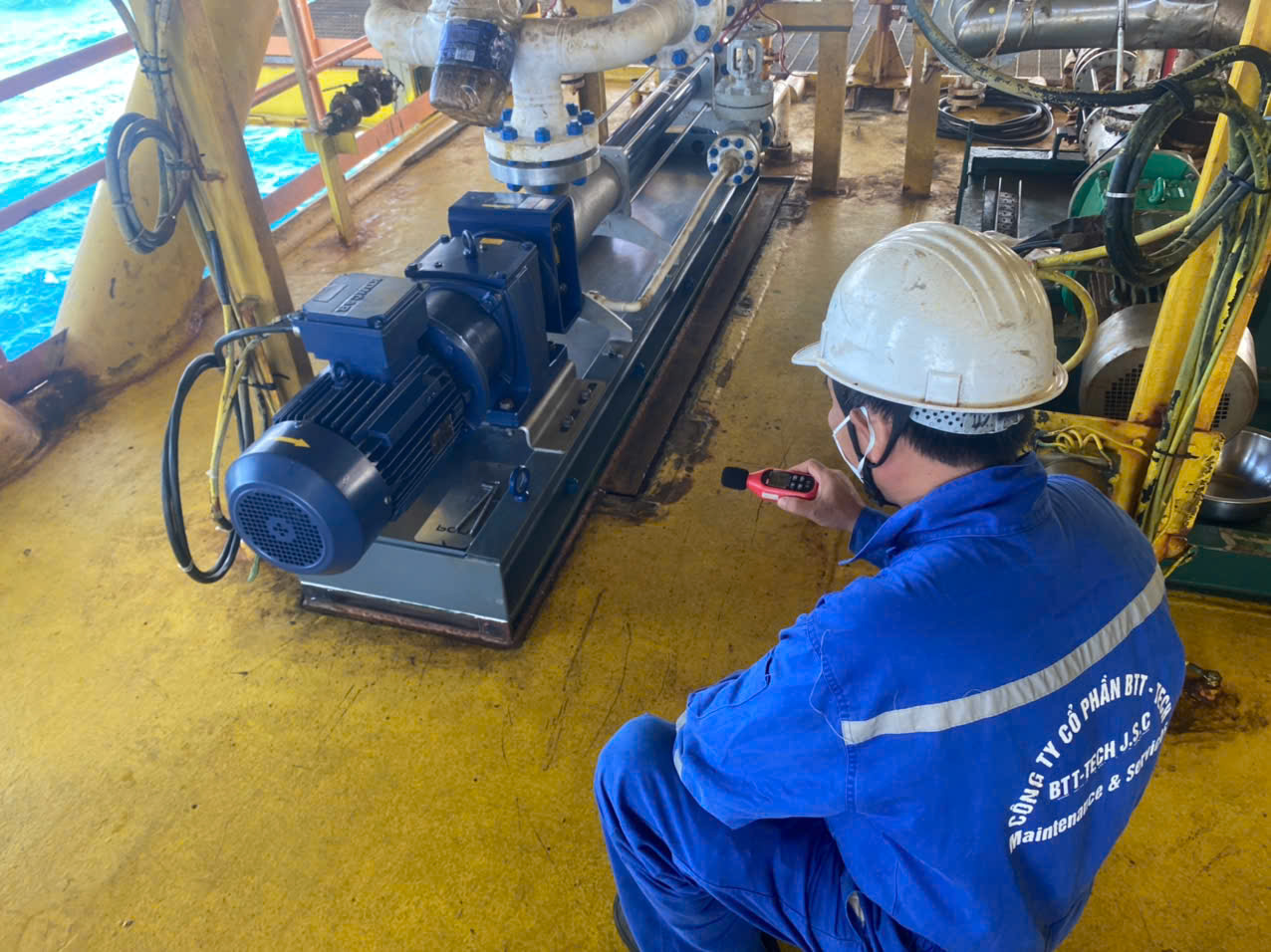
Implementing a preventive and predictive maintenance schedule is an essential strategy for protecting your industrial assets:
- Early fault detection: Identify minor issues before they escalate, significantly reducing the risk of unplanned downtime.
- Performance optimization: Minimize wear and tear to maintain peak efficiency and extend the overall life of your rotating equipment.
- Cost reduction: Lower overall costs by preventing expensive emergency repairs and avoiding the heavy financial losses associated with production halts.
Conclusion
Rotating equipment is the undisputed core of modern industrial systems. From the fluid transport of pumps to the power generation of turbines and engines, these machines convert energy into the mechanical motion that drives global production.
Gaining a deep understanding of what rotating equipment is, how it works, and its various classifications allows businesses to optimize performance and build effective maintenance frameworks. In an era where industrial reliability is paramount, investing in the monitoring and care of these assets is a decisive factor for success.
If your business is seeking professional solutions for your rotating equipment, BTT Tech Joint Stock Company is your trusted partner. We provide specialized services to ensure your machinery stays in motion:
- Maintenance, servicing & overhaul rotating equipment
- Technical consulting
- Custom SKID fabrication
- Supply of spare parts for rotating equipments, mechanical seals, and consumables
Contact BTT Tech today to enhance your performance, eliminate downtime, and ensure your rotating equipment operates at peak reliability.


